

When people think about the elements of packaging, package design is the first thing that often comes to mind. While aesthetics matter and packaging must protect your product, there are other critical factors to consider when evaluating—or re-evaluating—the right packaging material. Lightweighting in packaging is one of these factors: an often-overlooked consideration in the packaging selection process.
When we work with our customers to enhance the efficiency of their packaging, lightweighting and rightsizing in packaging is a key focus.
What is Lightweighting in Packaging?
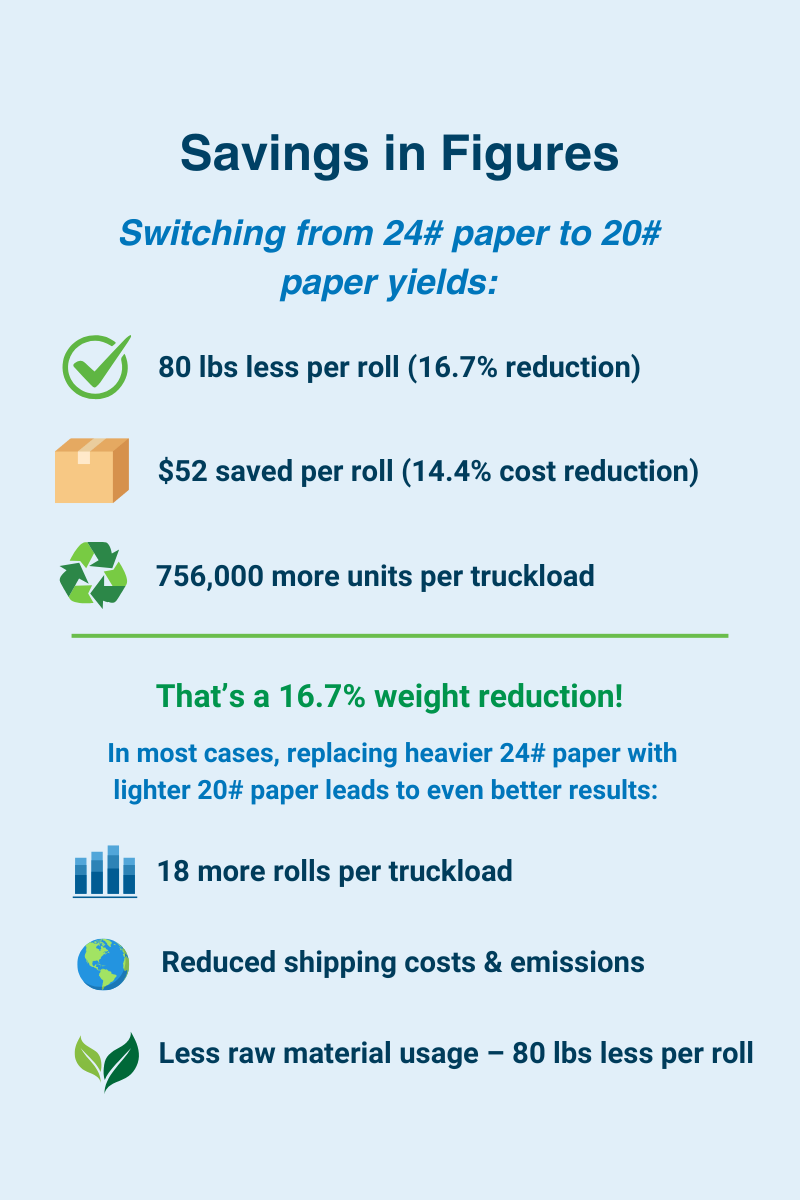
Lightweighting refers to a reduction in packaging that maintains its performance, protection and durability.
Packaging your products for protection is essential, but it’s important to fully understand your needs. In many cases, packaging is over-engineered, or uses more material than necessary to achieve the same level of protection. That’s why using lightweight packaging materials is an important consideration: it can help strike a good balance between performance and efficiency.
Our discussions around lightweighting in packaging typically focus on a few key benefits:
- Cost Reduction: If your organization is investigating how to reduce packaging costs, lightweighting can provide an efficient answer. Using less material lowers raw material costs and reduces shipping and logistics expenses.
- Sustainability Gains: Lightweighting reduces materials, cuts waste and lowers carbon emissions from production and shipping. It can help meet sustainability targets while aligning with consumer demand for more eco-friendly packaging—without compromising performance.
- Regulatory Readiness: While lightweighting isn’t typically mandated by legislation, it can be a smart long-term strategy for optimizing your packaging, particularly if a previous regulatory-driven packaging change was implemented quickly and wasn’t ideal. Evaluating your products’ packaging material usage can help refine your packaging to better align with both compliance requirements and operational efficiency.
- Performance Optimization: Packaging needs evolve. If it’s been a while since you’ve evaluated your product’s packaging, a fresh look can help you identify opportunities to trim excess weight without compromising performance.
Key Considerations for Lightweighting in Packaging
Lightweighting isn’t necessarily a one-size-fits-all solution. Some companies find that the trade-offs outweigh the benefits. A good example is a customer that did a lightweighting audit and found that the potential risk of damage to their product wasn’t worth achieving a reduction in packaging.
Here are just a few things to consider:
- Product Protection: Lightweight packaging materials may not provide the same level of protection as heavier alternatives, which may be particularly relevant to fragile or perishable goods.
- Manufacturing Constraints: Some packaging machines may not handle thinner materials and will ultimately slow down production speeds, increase scrap rates or require significant adjustments that make lightweighting infeasible.
- Cost Effectiveness: How to reduce packaging costs is a question that must be answered over the lifetime of the product. Transitioning to a new material or process may require higher upfront investments and machine retooling, so be sure to evaluate whether those expenditures are balanced out over time by lower logistics costs.
- Material Substrates: Switching to lightweight packaging materials such as paper can change production and protective capabilities when your primary packaging material is plastic. Rigorous testing is essential, as not all products are well suited for this transition.
When a Reduction in Packaging Might Not Be a Fit
Cost and performance are two primary reasons why people may decide not to pursue rightsizing in packaging. Here are a few other reasons why it might not be the ideal choice:
- You need better protection. Products that are perishable, moisture-sensitive or in need of specific environmental controls, like electronics or food items, may need robust packaging that lightweighting could compromise.
- Your product is fragile. When items such as glassware can be easily broken in transport, reducing packaging materials could lead to increased product waste and higher costs in the long run.
- It poses manufacturing challenges. If a switch to lightweight packaging materials results in cost savings but causes your production to slow down, the overall impact may be negative. For example, if switching materials saves 10 percent in costs but requires a 20 percent slowdown to maintain the quality, the trade-off may not be worth it.
Are Lightweight Packaging Materials Right for You?

If you’re trying to decide if a reduction in packaging is the right choice for your product, here are a few questions to ask:
- What does your packaging need to do? As a first step, you should identify the primary function for your packaging. Do you need to see inside the package or does the package simply serve to protect against the elements? Is moisture or grease protection important? Do you need it to withstand long shipping times or hold up in a retail environment? Having a clear grasp of these performance requirements will enable you to determine if lightweight packaging materials can meet your needs.
- Is cost savings a primary goal? While lightweighting can reduce costs, you may find that these savings don’t offset the increase in production expenses. Identify all costs associated with the effort, including freight, materials and production, to assess whether lightweighting in packaging is a good strategy for how to reduce packaging costs.
- Do you currently use too much packaging? There’s a chance that your existing packaging materials are more than you need. If you haven’t rightsized your packaging to identify the correct thickness or performance requirements, you might be a good candidate for lightweighting. You should also evaluate your primary and secondary packaging to identify additional opportunities for a reduction in packaging.
- Will lightweighting support your sustainability goals? If your organization has a sustainability program in place, lightweighting packaging may help you meet your environmental targets. By using less material, lightweighting decreases resource consumption, minimizes emissions and lowers the overall lifecycle impact of your packaging. It can also align with consumer demand for more eco-friendly products.
- Are you ready for extensive testing? A lighter package must still perform reliably, which requires rigorous testing. This includes strength and durability testing to ensure it withstands shipping and handling, lifecycle assessments to assess sustainability impacts, and real-world application testing to confirm the new material won’t compromise protection. Material comparisons are also essential to find the best balance among weight, functionality and cost. Skipping this step can lead to package failures, increased product damage and costly redesigns.
The Bottom Line: Lightweighting is a Strategic Decision
For some businesses, lightweighting is a game-changer. It can improve efficiency and support sustainability goals. For others, the trade-offs may not make sense given their product requirements. The key is to approach the decision with clear objectives, solid data, and expert support. This is just one of the many value-added services we offer our customers to make sure their packaging fits their needs.
Thinking about lightweighting in packaging? Let’s evaluate your needs together!