
Top 5 Reasons to Make the Switch
Single-use plastic bags for apparel packaging are cheap and widely produced, but they significantly contribute to environmental waste—and customers are taking note. If your apparel brand is focused on sustainability, plastic polybags send the wrong message. Here are four reasons to stop wrapping apparel in plastic.
Even if you’re ready to make the switch to a sustainable packaging solution, there are so many options that it can be hard to determine the right choice for your brand. If you haven’t considered glassine, now is the time to check out this translucent, durable material made 100% from paper. Let’s explore five reasons glassine is the right packaging choice for your apparel brand’s sustainability journey.
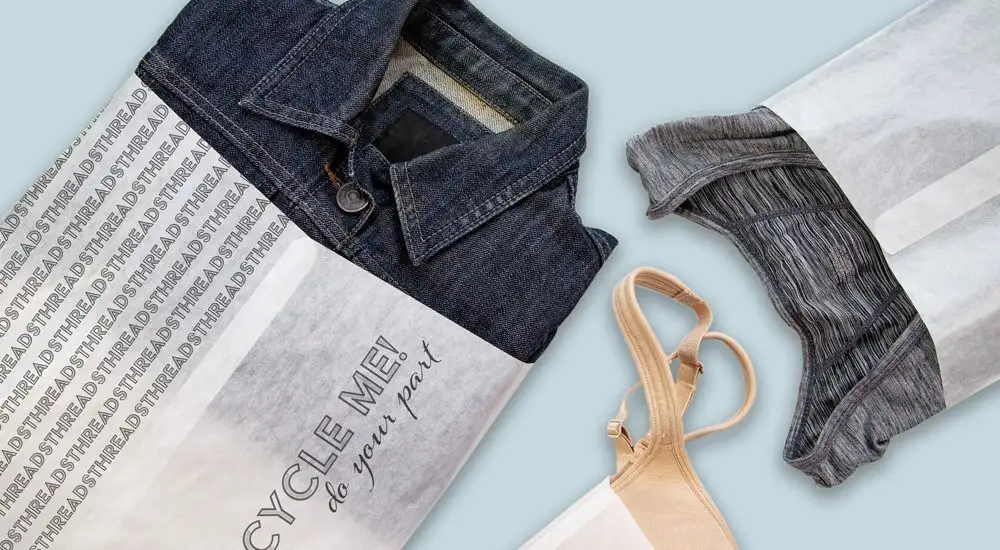
1. Glassine is recyclable, biodegradable and made from renewable materials.
Glassine is a glossy paper made from wood pulp, a renewable material. Free from coatings, it can be easily recycled and is naturally biodegradable. Glassine is pH neutral, acid-free, and resistant to moisture, air and grease, making it a great alternative to plastic packaging. Its natural shine gives it a beautiful, upscale quality perfect for customers experiencing your brand for the first time.



Not only is glassine an ideal material to help you tell your sustainability story, buying your glassine from JBM Packaging offers you the additional credibility of working with a purpose-driven company:
- Forest-safe paper: All paper used by JBM comes from FSC (Forest Stewardship Council) certified mills, which means the paper has been harvested and produced responsibly.
- Eco-friendly inks: JBM makes it easy to choose environmentally friendly soy-based and water-soluble inks, which release fewer volatile organic compounds (VOCs) into the air than petroleum-based inks.
- Made in the USA: JBM manufactures its packaging in the United States, which can reduce transportation-related carbon emissions compared to using materials produced overseas.
- Fair Chance hiring practices: Furthermore, JBM is a Fair Chance employer, providing career opportunities to the recently incarcerated.
2. Glassine is durable and translucent.
Glassine is made using a process called supercalendering. (Learn more about the supercalendering process.) The result is a paper with unique properties:
- Translucence: Glassine is transparent enough to allow a barcode inside the packaging to be scanned. Combined with clever design choices for glassine, it will display your apparel and accessories beautifully.
- Durability: Glassine has twice the density (40-90 grams per square meter) of other common papers, making it stronger and more durable than standard paper of the same weight.
- Glossy, shiny surface: Glassine’s natural sheen comes without the use of coatings, making it curbside recyclable and home compostable.
All of these qualities give glassine a high-end feel that your customers will love.
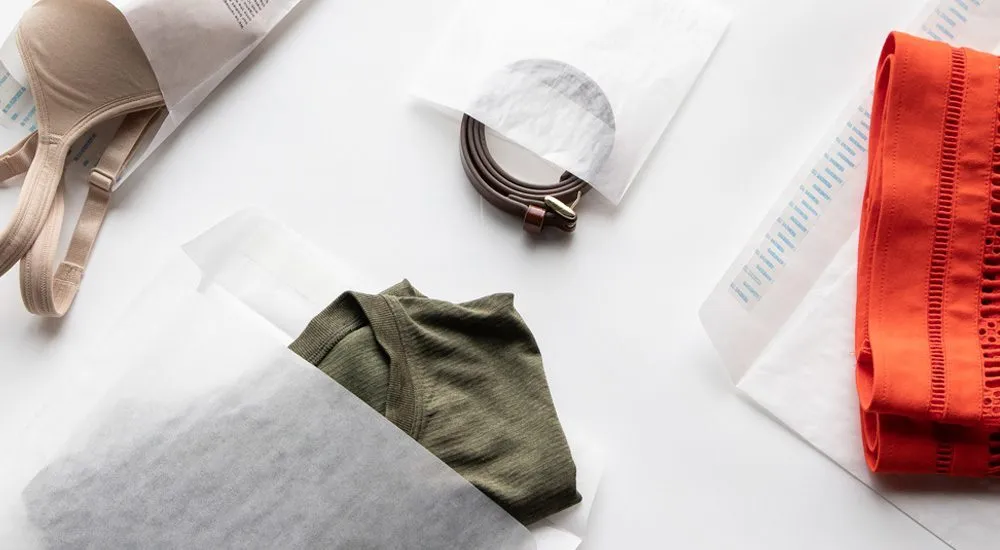
3. Glassine allows your brand to shine.
Unlike plastic polybags, which often display only “choking hazard” warnings, glassine is fully brandable because it is made of paper. Whether you’re seeking full-coverage color, highly detailed patterns, or anything in between, your possibilities are endless.
Printing on glassine, however, requires a significant level of expertise and experience with the paper, specialty inks and specialized equipment. JBM Packaging has manufactured billions of glassine bags and has spent years researching the best methods to print, cut and fold this poly bag alternative. Unlike other glassine manufacturers, we can print your logo, brand colors, messaging and sustainability benefits right on the bag, transforming your apparel packaging into a valuable brand asset.
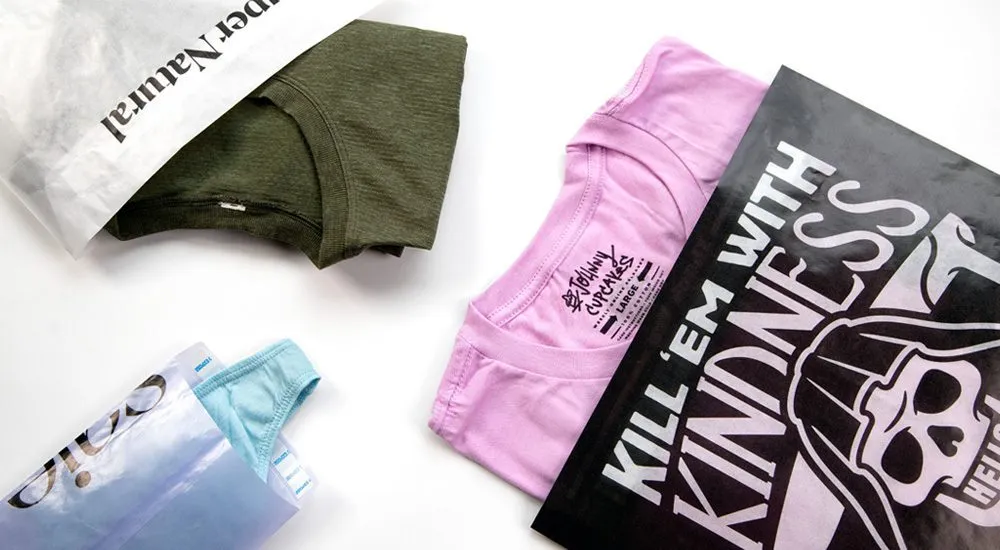
4. Glassine delivers a exceptional experience.
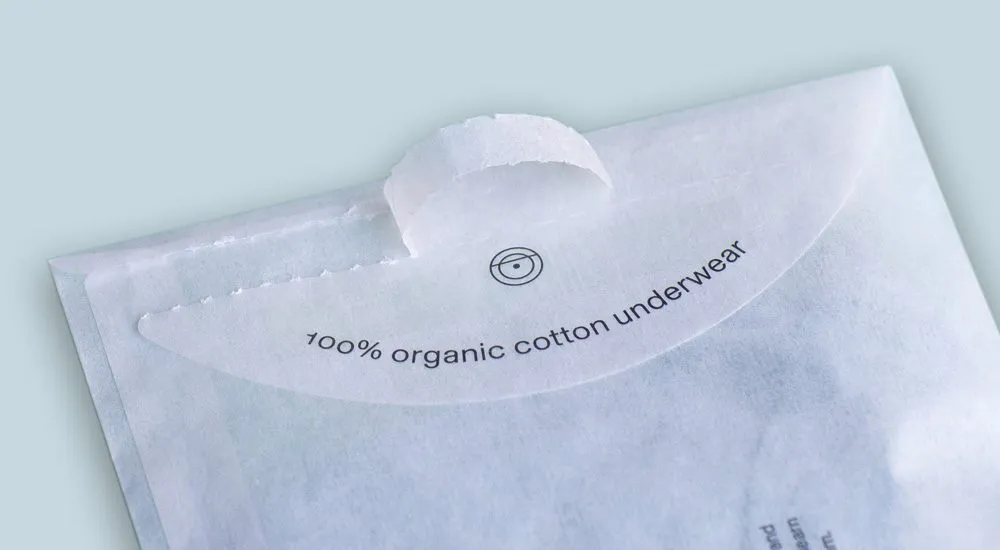
Because glassine is smooth to the touch and durable, your apparel will remain uncompromised and beautifully displayed inside its glassine packaging. To deliver your ideal opening experience, JBM will work with you to design a packaging solution that will reflect your brand and product needs. We’ll identify the correct sizing, package construction (center seam or side seam), and package closure for your needs.
Popular closures for glassine bags include:
- Peel and seal adhesive
- Resealable adhesive
- Perporated tear strip
- Easy-open notch closure
- Tamper-proof security closure
As you can see, the options for customization are endless, so you can create the perfect glassine package to tell your brand story and delight your customers.
With a switch from a plastic polybag to glassine, your customers will enjoy a high-end opening experience that conveys your commitment to sustainability. By giving customers the option to recycle your packaging rather than send it to the landfill, you create a lasting positive impression for your brand.
5. Glassine beats the alternatives.
There are other alternatives to plastic polybags, but they do not offer the same recyclability, durability and branding capabilities.
Here are a few common plastic packaging alternatives and how they stack up to glassine:
- Vellum is commonly used to describe all translucent papers and has a slightly rough surface compared to glassine. It is considerably more delicate and can be easily punctured or torn.
- Parchment paper is a cellulose-based paper that has been chemically treated and infused with silicone to create a non-stick surface. It is difficult to print on or adhere labeling to, and it is not recyclable or compostable.
- Wax paper is coated with a thin layer of paraffin or soybean-based wax. It is also difficult to print on or adhere labeling to and is not recyclable or compostable.
- Cellophane is a completely transparent film that looks like plastic but is made of cellulose that has been removed from wood, hemp, cotton, or another plant source. Cellophane’s manufacturing process is not eco-friendly because it uses toxic chemicals to remove elements that soften and bleach the cellulose. These chemicals often release methane once the cellophane product reaches a landfill.
- Bioplastics are made from plant-based materials such as corn or sugarcane instead of petroleum. Bioplastics comprise many varieties of materials, and there is wide variation in manufacturing processes and materials usage within the category. Some bioplastics can be recycled or composted, while others must be disposed of in the trash and taken to a landfill. Because there are so many varieties of bioplastics, you will need to provide significant consumer education to ensure proper disposal.
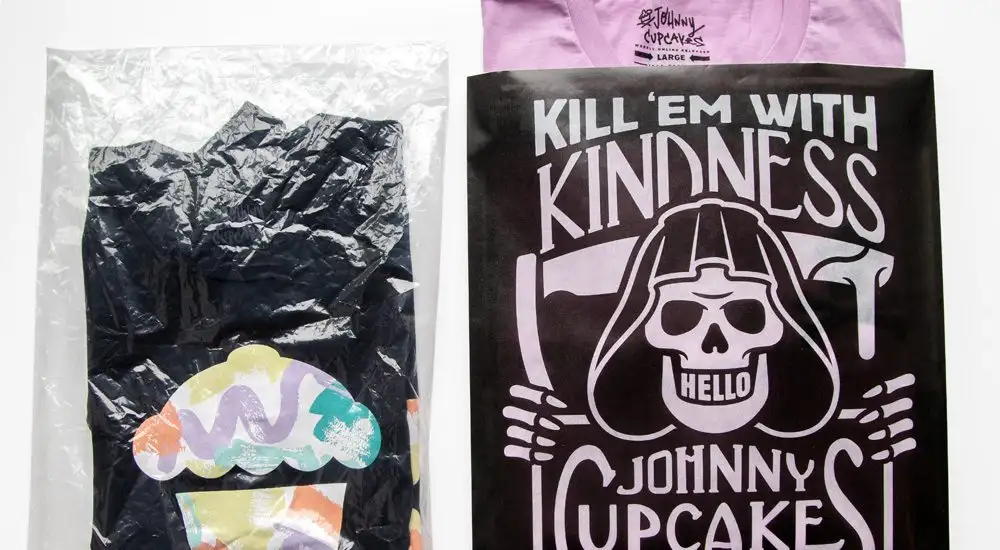
Transition from polybags to glassine
Ready to show your customers that you are committed to sustainability? Now is the perfect time to switch to glassine packaging, the 100% curbside-recyclable, compostable option that you and your customers will feel good about.
JBM Packaging offers glassine bags and glassine envelopes perfect for packaging casual wear, swimwear, intimates, dress wear, accessories and more. Glassine paper sheets are also available as a sturdy alternative to tissue paper. From T-shirts and yoga pants to belts and underwear, glassine protects your garments while providing an artfully designed and customized brand experience for your customer.
Interested in seeing what glassine can do for you? We’d love to send you free samples of glassine and any other paper products you’re interested in! Reach out to our team today.